How to Hire a Roofer in South Florida: What to Look For and What to Avoid
The complete guide to finding a legitimate roofing contractor in Broward and Palm Beach Counties — and avoiding the scams that cost homeowners thousands…
The complete guide to finding a legitimate roofing contractor in Broward and Palm Beach Counties — and avoiding the scams that cost homeowners thousands
TL;DR
Hiring a roofer in South Florida requires more diligence than most other states. Between hurricane-related insurance claims, strict building codes, and storm chasers flooding the market after every tropical system, homeowners need to know how to separate legitimate contractors from fly-by-night operations. This guide covers the critical steps: verifying state licenses on DBPR.gov, confirming HVHZ certification, checking insurance coverage, understanding permits, recognizing red flags, and protecting your payment. Follow these steps and you'll avoid the costly mistakes that plague South Florida homeowners every storm season.
Your roof is the most important component of your home. In South Florida, where we face hurricanes, intense sun, and torrential rain, it's also one of your biggest investments — often $20,000 to $40,000 or more.
Yet every year, thousands of homeowners get burned by unlicensed contractors, storm chasers, and outright scams.
Here's how to protect yourself and hire a legitimate roofing contractor in Broward and Palm Beach Counties.
Step 1: Verify the Florida State Contractor License
This is the single most important step — and the one most homeowners skip.
In Florida, anyone performing roofing work over $1,000 must hold either:
- CCC License (Certified Roofing Contractor) — Roofing-specific license
How to Verify a License
What You're Looking For
✓ License is active — Not expired, suspended, or revoked
✓ License matches the work — A CCC, CBC, or CGC license is required for roofing
✓ No disciplinary actions — Check for complaints, violations, or enforcement actions
✓ Qualifications — The person holding the license should be the owner or a principal of the company
🚩 Red Flag: Any contractor who won't provide their license number or gets defensive when asked is not someone you want on your roof.
!All Phase Construction team member on a South Florida roof installation
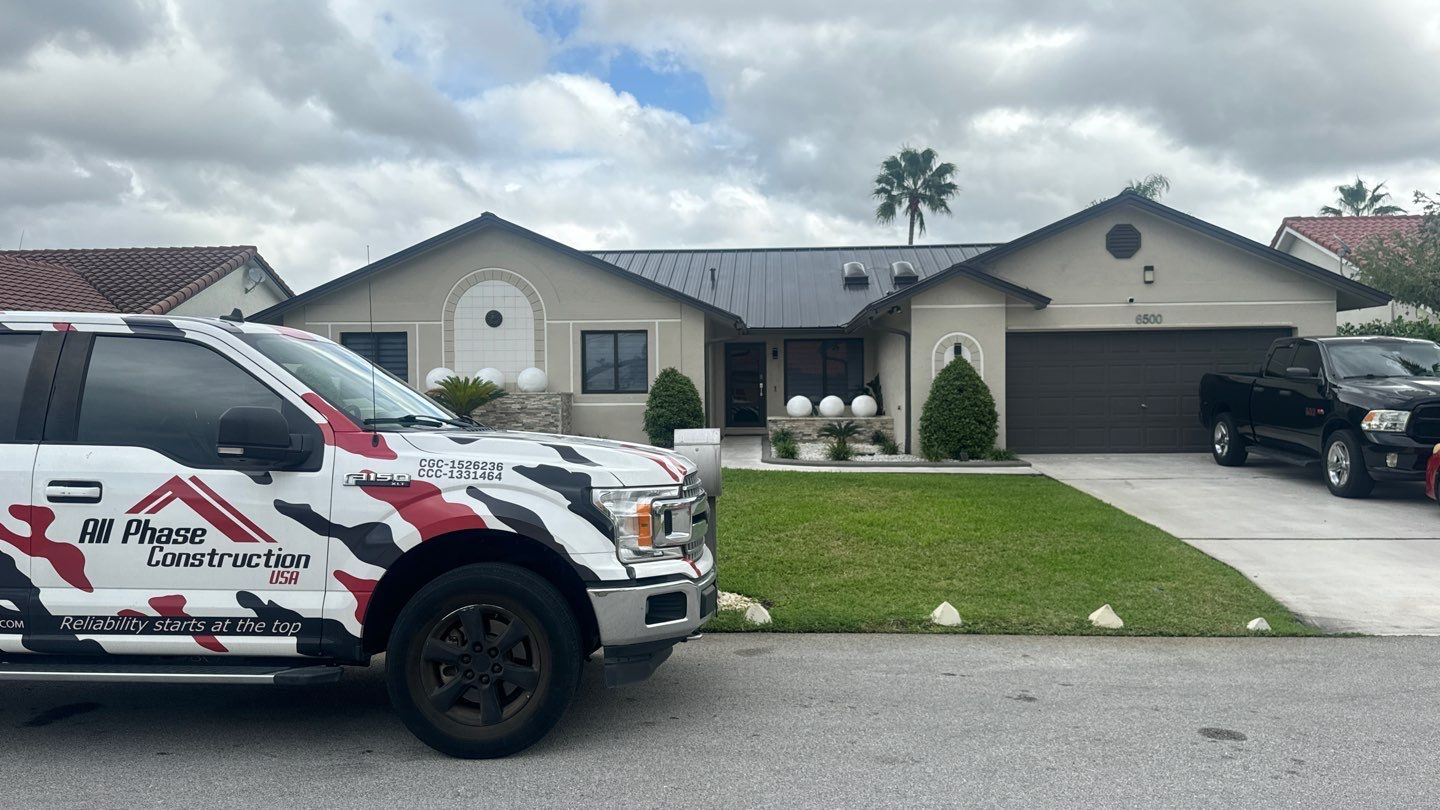
Legitimate contractors like All Phase Construction employ trained, insured crews — not day laborers hired off Craigslist
Step 2: Confirm HVHZ Certification for Broward and Palm Beach Counties
South Florida is unique: most of Broward and Palm Beach Counties are designated High Velocity Hurricane Zones (HVHZ).
This means roofing installations must meet stricter standards than the rest of Florida — and most of the United States.
Why HVHZ Matters
HVHZ requirements include:
If your contractor doesn't understand HVHZ requirements, they're not qualified to work in Broward or Palm Beach County.
How to Verify HVHZ Experience
Ask these questions:
A legitimate contractor will answer confidently. A storm chaser will fumble or deflect.
Step 3: Verify Insurance and Workers' Compensation
Florida law requires roofing contractors to carry:
Why This Matters
If an uninsured worker gets hurt on your property, you could be liable for medical bills, lost wages, and legal fees — potentially hundreds of thousands of dollars.
How to Verify Insurance
✓ Ask for a Certificate of Insurance (COI) — They should provide this without hesitation
✓ Call the insurance company directly — Verify the policy is current and covers the dates of your project
✓ Check workers' comp status — Florida maintains a public database at MyFloridaCFO.com/Division/WC
🚩 Red Flag: "We don't carry insurance — that keeps our prices low." This is illegal and leaves you massively exposed.
Step 4: Get Written Estimates (Plural)
Never hire the first roofer you talk to. Get at least three written estimates.
What Should Be in the Estimate?
A legitimate estimate includes:
✓ Scope of work — Detailed description of what will be done
✓ Materials specified — Brand, product line, color
✓ Cost breakdown — Labor, materials, permits, disposal
✓ Timeline — Start and completion dates
✓ Payment schedule — When payments are due (more on this below)
✓ Warranty information — Both manufacturer and workmanship warranties
✓ License numbers — Contractor's CCC/CGC and insurance info
Compare Apples to Apples
Make sure all three estimates are quoting:
🚩 Red Flag: An estimate that's drastically lower than others may be cutting corners — using inferior materials, skipping permits, or hiring uninsured labor.
Step 5: Understand the Permit Process
In South Florida, nearly all roofing work requires a permit.
Why Permits Matter
Permits ensure:
Work done without permits can void your insurance, create problems when selling, and leave you liable for code violations.
What Your Contractor Should Do
A legitimate contractor will:
🚩 Red Flag: "We can skip the permit to save you money." This is illegal, voids your insurance, and leaves you holding the bag if problems arise.
Step 6: Recognize Storm Chaser Red Flags
After every hurricane or tropical storm, South Florida gets flooded with out-of-state contractors looking to make quick money.
Here's how to spot them:
Storm Chaser Red Flags
🚩 Door-to-door solicitation — "I was working in your neighborhood and noticed your roof..."
🚩 Out-of-state license plates — Trucks from Louisiana, Texas, or other storm-prone states
🚩 High-pressure tactics — "This price is only good today" or "Your insurance claim will expire"
🚩 Offers to pay your deductible — This is insurance fraud
🚩 P.O. Box address — No physical office location
🚩 Can't provide local references — No established history in South Florida
🚩 Wants full payment upfront — Legitimate contractors don't need this
What Happens with Storm Chasers
They typically:
Work with established local contractors who have a permanent office and a reputation to protect.
!All Phase Construction office building in Deerfield Beach
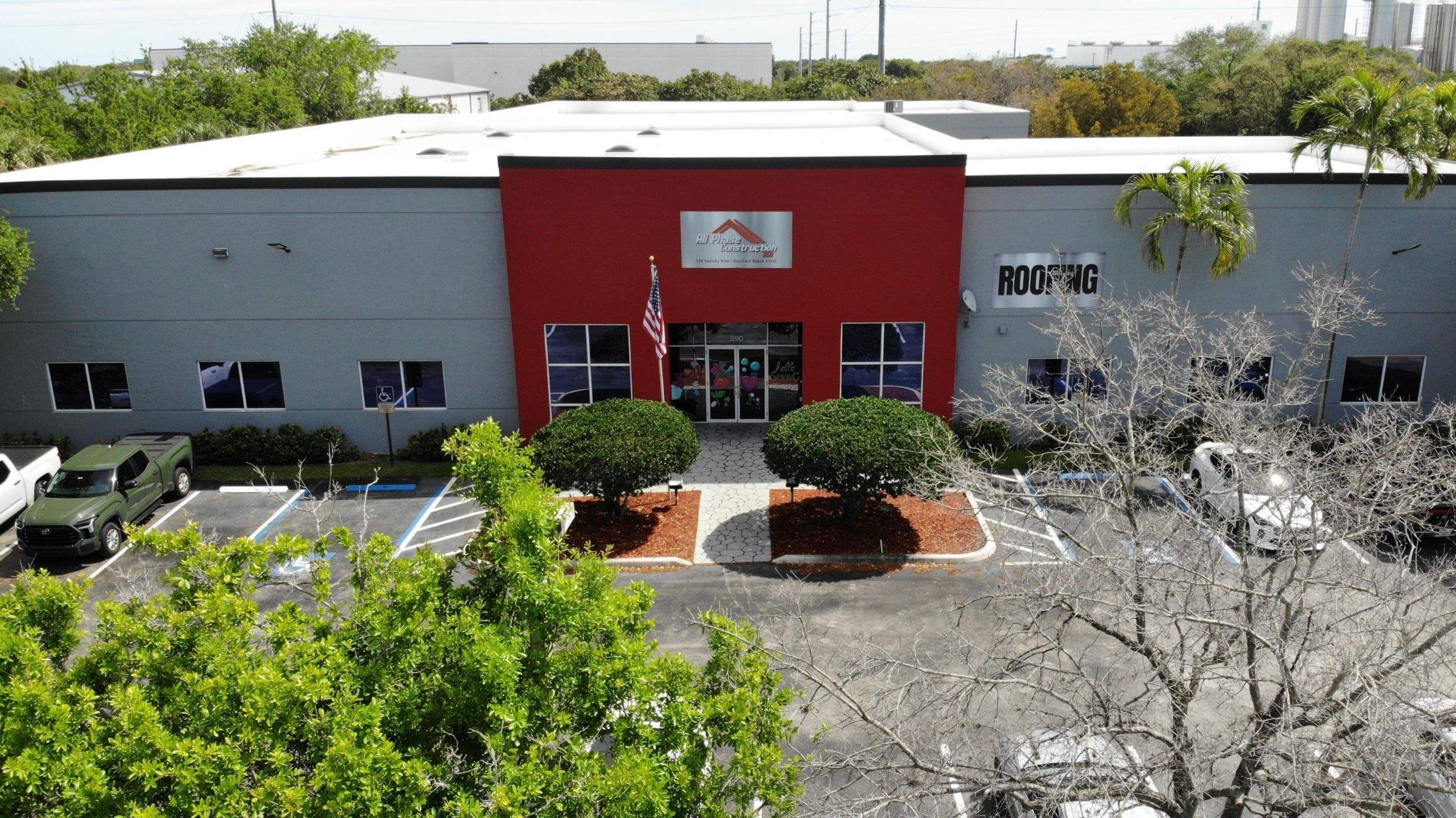
All Phase Construction headquarters at 590 Goolsby Blvd, Deerfield Beach — not a P.O. box, not a temporary office
Step 7: Never Pay 100% Upfront
Florida law protects homeowners from contractors demanding full payment before work is complete.
Reasonable Payment Schedule
A typical payment structure:
🚩 Red Flag: Any contractor demanding 50% or more upfront — or worse, 100% — is a massive risk. Once they have your money, you have no leverage.
Florida Law on Deposits
Florida Statute 713.135 limits contractor deposits to no more than 10% of the contract value or $1,000, whichever is less, for unsolicited contracts.
While this doesn't apply to contracts you initiate, it's a good guideline for what's reasonable.
Step 8: Check Reviews and References
In 2026, there's no excuse for not researching a contractor online.
Where to Check
✓ Google Reviews — Look for 4.5+ stars with substantial review count
✓ Better Business Bureau (BBB) — Check for complaints and how they were resolved
✓ Angi (formerly Angie's List) — Verified customer reviews
✓ Nextdoor — Neighborhood-specific recommendations
✓ Social Media — Facebook, Instagram — do they have an active local presence?
What to Look For
🚩 Red Flag: No online presence, fake-looking reviews (all posted the same day), or deflecting when you ask for references.
Step 9: Understand Warranty Coverage
Roofing warranties are complicated — and many homeowners don't understand what's actually covered until it's too late.
Two Types of Warranties
1. Manufacturer's Material Warranty
2. Workmanship Warranty
Questions to Ask
A legitimate local contractor with a permanent office is far more likely to honor warranties than a storm chaser who's gone by next year.
Step 10: Trust Your Gut
Beyond all the technical checks, sometimes it comes down to how you feel about the contractor.
Green Flags
✓ They answer questions patiently — No defensiveness or evasion
✓ They explain the process clearly — You understand what's happening and why
✓ They're licensed, insured, and established locally — They have skin in the game
✓ They provide references willingly — They're proud of their work
✓ The estimate is detailed and professional — Not scribbled on a napkin
✓ They're not the cheapest or the most expensive — They're competitive but not suspiciously low
Red Flags
🚩 High-pressure sales tactics — "Sign today or the price goes up"
🚩 Vague or unclear answers — They can't explain their process
🚩 Won't provide license or insurance — Defensive when asked
🚩 Prices too good to be true — Significantly lower than competitors
🚩 No local office or references — They're here today, gone tomorrow
If something feels off, trust that instinct. Your roof is too important to ignore warning signs.
The All Phase Construction Difference
When you work with All Phase Construction USA, here's what you get:
✓ Dual-licensed contractor — Both CCC-1331464 (Roofing) and CGC-1526236 (General Contractor)
✓ HVHZ certified — Over 2,500 roofs completed in Broward and Palm Beach Counties
✓ Fully insured — General liability and workers' compensation coverage
✓ Permanent local office — 590 Goolsby Blvd, Deerfield Beach, FL 33442
✓ 20+ years in business — Established in 2002, not a storm chaser
✓ Manufacturer certifications — TAMKO Platinum Pro, FRSA member
✓ Transparent estimates — Detailed scope, materials, costs, and timeline
✓ Proper permitting — We pull permits and coordinate inspections
✓ Strong warranties — Both manufacturer and workmanship coverage
✓ Local references — We can provide recent customers in your area
We're not the cheapest — but we're the contractor who will answer the phone five years from now.
Questions to Ask Any Roofing Contractor
Before you sign a contract, ask these questions:
A legitimate contractor will answer all these questions confidently and provide documentation.
Common Scams to Avoid
The "Free Roof" Scam
"Your insurance will cover everything — you'll get a free roof!"
Reality: You'll still owe your deductible, and inflated claims can lead to policy cancellation or fraud charges.
The Deductible Waiver Scam
"We'll waive your deductible if you sign with us today!"
Reality: This is insurance fraud. If caught, both you and the contractor face legal consequences.
The "We're Already in Your Neighborhood" Scam
Door-to-door solicitors claiming they're doing work nearby.
Reality: Often unlicensed storm chasers looking for quick deposits before disappearing.
The "No Permit Needed" Scam
"We can skip the permit to save you money."
Reality: Unpermitted work voids insurance, creates liability, and causes problems when selling your home.
The Material Upgrade Bait-and-Switch
Cheap quote using "premium materials" that turn out to be builder-grade.
Reality: Always get materials specified in writing — brand, product line, and color.
Your Roofing Project Checklist
Print this checklist and use it when hiring a roofer:
If you can't check every box, don't sign the contract.
Ready to Hire a Legitimate South Florida Roofer?
All Phase Construction USA has been serving Broward and Palm Beach Counties since 2006. We're licensed, insured, locally established, and ready to earn your trust.
We'll provide a detailed written estimate, answer all your questions, and show you why working with an established local contractor makes all the difference.
Learn More About Roofing in South Florida
Frequently Asked Questions
How do I verify a roofing contractor's license in Florida?
Visit DBPR.gov (Florida Department of Business and Professional Regulation) and search for "License Verification." Enter the contractor's license number to confirm it's active and check for disciplinary actions. Look for CCC (Certified Roofing Contractor), CBC (Certified Building Contractor), or CGC (Certified General Contractor) licenses. Never hire a roofer who won't provide their license number or whose license isn't active.
What is HVHZ certification and why does it matter in South Florida?
HVHZ stands for High Velocity Hurricane Zone, a designation that covers most of Broward and Palm Beach Counties. HVHZ requires stricter roofing standards including enhanced fastening methods, impact-resistant materials, and rigorous inspections. Contractors working in HVHZ areas must understand these requirements — if they don't, they're not qualified to work on your roof. Always ask contractors about their HVHZ experience and request references from projects in your county.
How much should I pay upfront for a new roof in Florida?
A reasonable deposit is 10–33% of the total project cost to cover material orders and scheduling. The bulk of payment (33–50%) should be due at substantial completion, with the final 10–20% held until after final inspection and your approval. Never pay 100% upfront — this leaves you with no leverage if problems arise. Florida law limits unsolicited contract deposits to 10% or $1,000 (whichever is less), which is a good guideline even for contracts you initiate.
What's the difference between manufacturer warranty and workmanship warranty?
The manufacturer's warranty covers defects in the roofing materials themselves (typically 25–50 years) but does NOT cover installation errors. The workmanship warranty covers installation defects and is provided by your contractor (typically 2–10 years). Both are important, but the workmanship warranty is only as good as the contractor standing behind it — which is why working with an established local contractor matters. Always get both warranty terms in writing before signing a contract.
How can I spot storm chaser roofers in South Florida?
Storm chasers typically appear after hurricanes with these red flags: door-to-door solicitation, out-of-state license plates, high-pressure "sign today" tactics, offers to waive your insurance deductible (illegal), no permanent local office (P.O. boxes only), inability to provide local references, and demands for full payment upfront. They collect deposits and either disappear or do substandard work before leaving town. Always work with established local contractors who have a permanent office, verifiable licenses, local references, and a reputation to protect.
Do I really need a permit for roof replacement in South Florida?
Yes. Nearly all roofing work in Broward and Palm Beach Counties requires a building permit. Permits ensure work meets Florida Building Code, includes proper inspections, keeps your insurance valid, and protects your home's value. Work done without permits can void your homeowner's insurance, create problems when selling your home, and leave you liable for code violations. Any contractor who suggests skipping permits "to save money" is asking you to break the law and put your home at serious risk. Always insist on proper permitting.
The Bottom Line
Hiring a roofing contractor in South Florida requires more diligence than most home improvement projects. Between hurricane-related claims, strict building codes, storm chasers, and outright scams, homeowners need to protect themselves.
Follow these steps:
Do this homework upfront and you'll avoid the costly mistakes that plague South Florida homeowners every storm season.
At All Phase Construction USA, we make this easy: we're licensed (CCC-1331464 & CGC-1526236), insured, locally established since 2006, and ready to provide references. We pull permits, employ trained crews, and stand behind our work.
Your roof is too important to trust to anyone less.
📍 Visit Us: 590 Goolsby Blvd, Deerfield Beach, FL 33442
📞 Call: 754-227-5605
✉️ Email: info@allphaseusa.com
Serving Broward & Palm Beach Counties | Licensed & Insured CGC-1526236 | CCC-1331464
Need Professional Roofing Service?
Contact All Phase Construction USA for expert roofing services in Broward and Palm Beach County.
Call (754) 227-5605Related Services & Resources
Roof Repair · Free Inspections · Cost Calculator · All Articles