Clay Tile Valley Repair in West Palm Beach — Finding a Leak We Couldn't See From the Attic
A West Palm Beach clay tile roof with a leak that could not be traced from inside the attic. The job became a textbook example of why a tile roof leak is almost never where the drip is — and why sometimes the only honest move is to open the roof.
What We Found
From the attic, nothing conclusive — the leak could not be seen from below. On top of the roof, the inspection told two stories: a scatter of cracked and slipped clay tiles across the field, and a long valley whose underlayment was well past its service life. The nearest suspect to the interior damage was a gooseneck vent, but there was no way to confirm that without opening the roof. So we said exactly that, and opened the roof at the gooseneck rather than sealing a guess and hoping.
How We Fixed It
Opening the tile at the gooseneck settled it: the plywood decking at the penetration was rotted — the kind of slow damage that never shows its face in the attic. We cut the rotted section out, replaced it with new decking, and resealed the penetration. The tile repair itself covered roughly one square — about a hundred square feet.
The valley got the full treatment rather than a patch: tiles lifted and stacked, the old underlayment stripped down a run of up to 25 feet, and the channel rebuilt with Polyglass Polystick TU Max, a self-adhered wind-and-water tile underlayment carrying Miami-Dade County approval. The membrane bonds directly to the deck, so there are no fastener penetrations through the waterproofing in the one place on the roof that handles the most water. The tiles were then relaid over the new membrane.
Why This Matters on a South Florida Roof
On a tile roof, the tile is the rain screen — the underlayment underneath is the actual waterproofing, and it ages out first. That is why a tile roof can look fine from the driveway and still leak, and why the honest diagnosis sometimes requires lifting tile instead of smearing sealant where the stain is. Valleys deserve special respect: a valley is where two slopes dump into one channel, which makes it the hardest-working spot on the roof and the first place an aging underlayment gives up.
The other lesson is about chasing leaks. Water travels along decking and framing before it shows up on a ceiling, so the drip and the entry point are rarely in the same place. Sealing the nearest visible target treats the symptom. Opening the roof at the actual suspect takes more honesty up front — and it is the difference between ending a leak and postponing it.
The Job in Photos
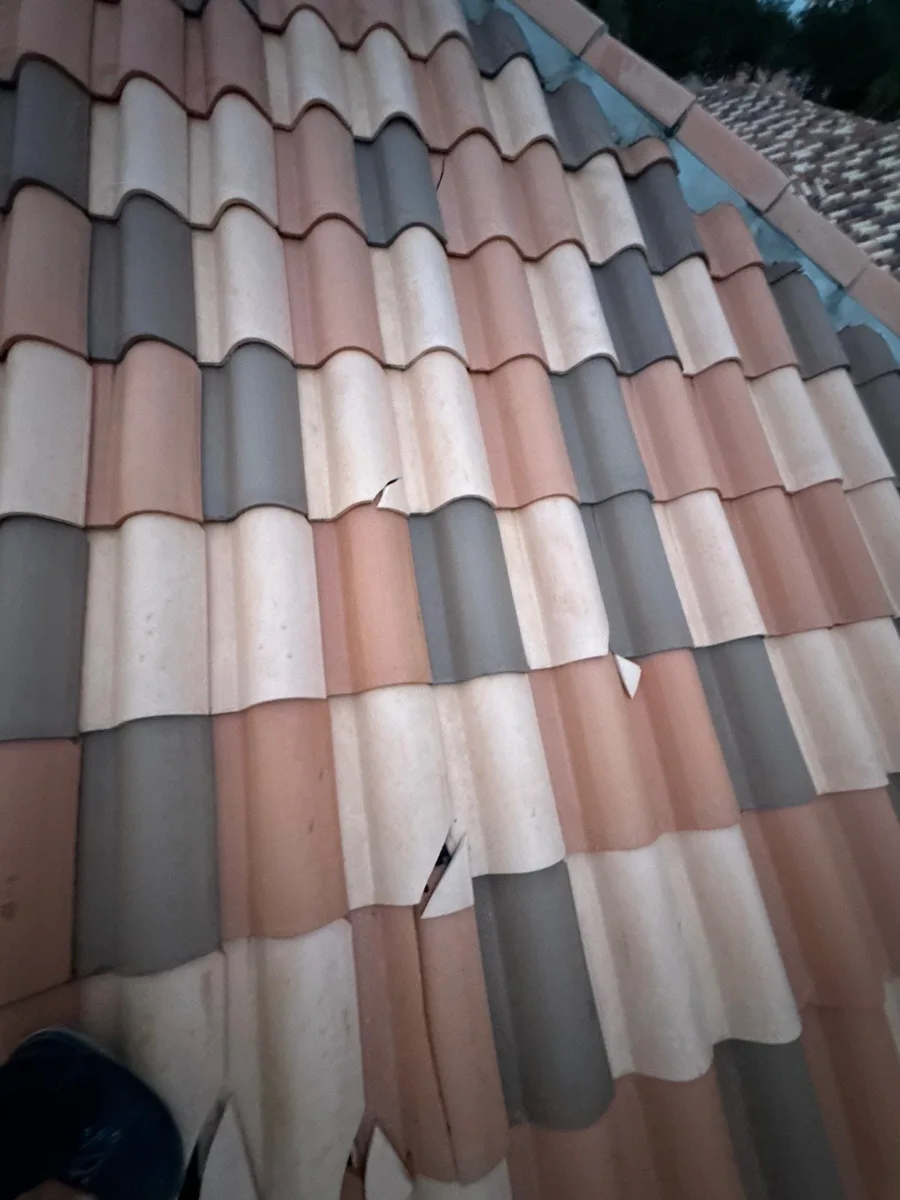
What the inspection found: cracked and slipped tiles scattered across the field — and a leak that did not line up with any of them.
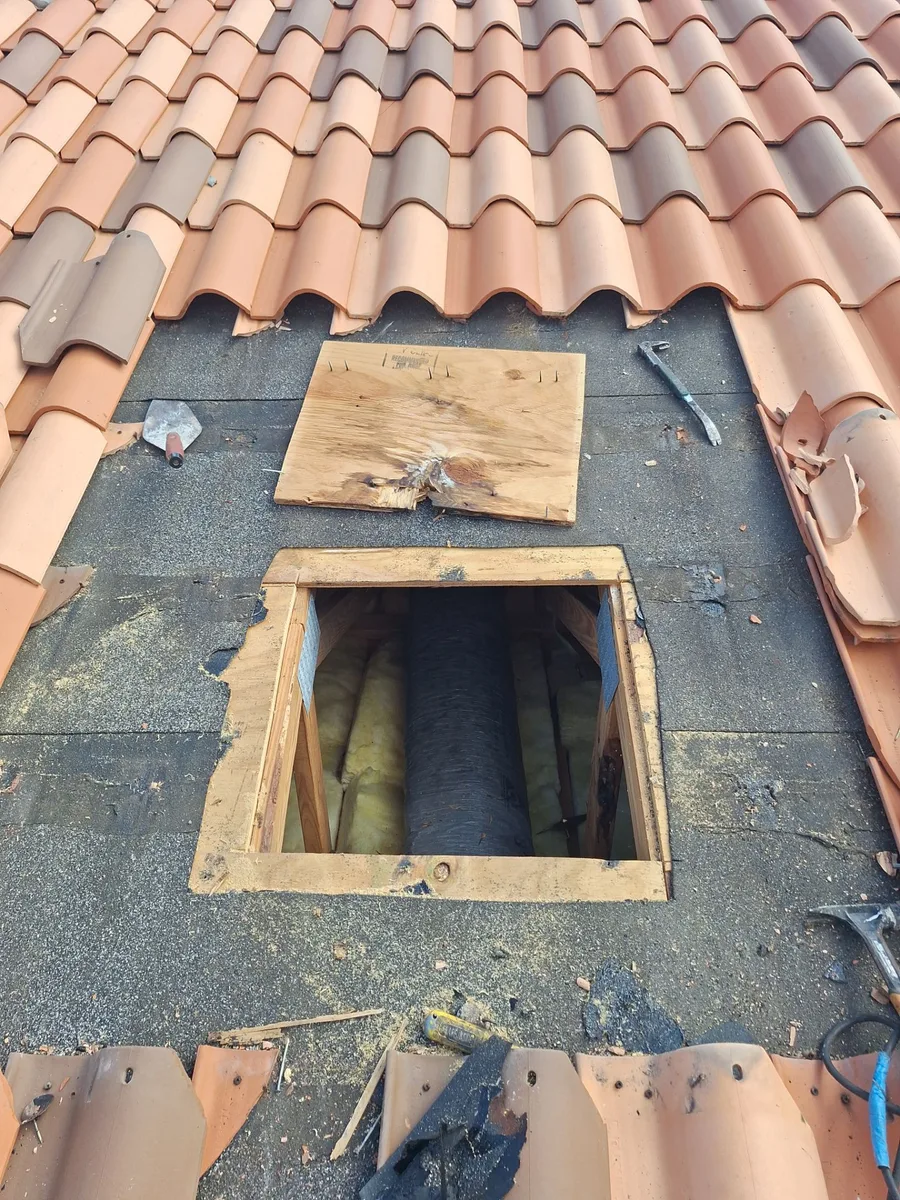
The answer was under the tile: the deck opened at the gooseneck, the rotted plywood cutout beside it — damage that never showed from the attic.
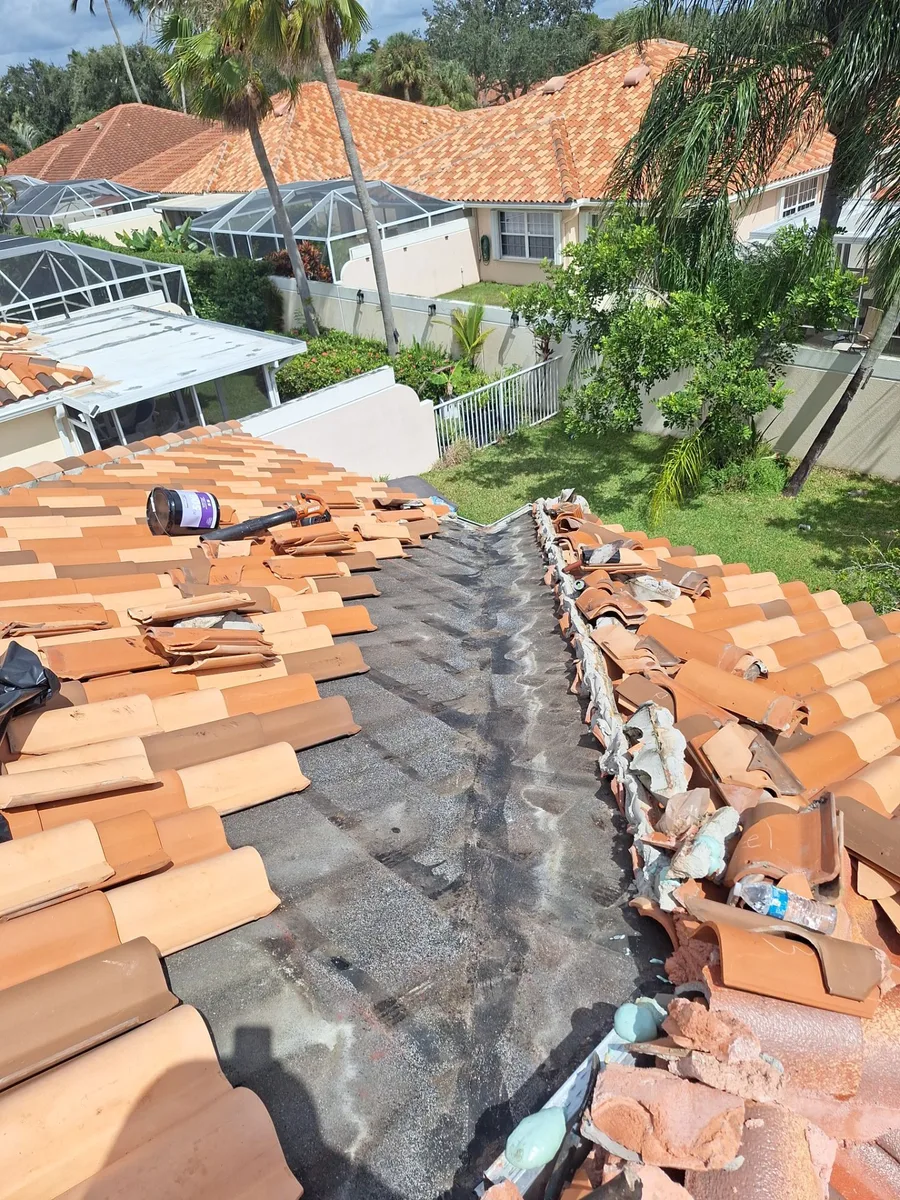
The valley opened up: tiles stacked aside for re-use, aged underlayment exposed down the full run.
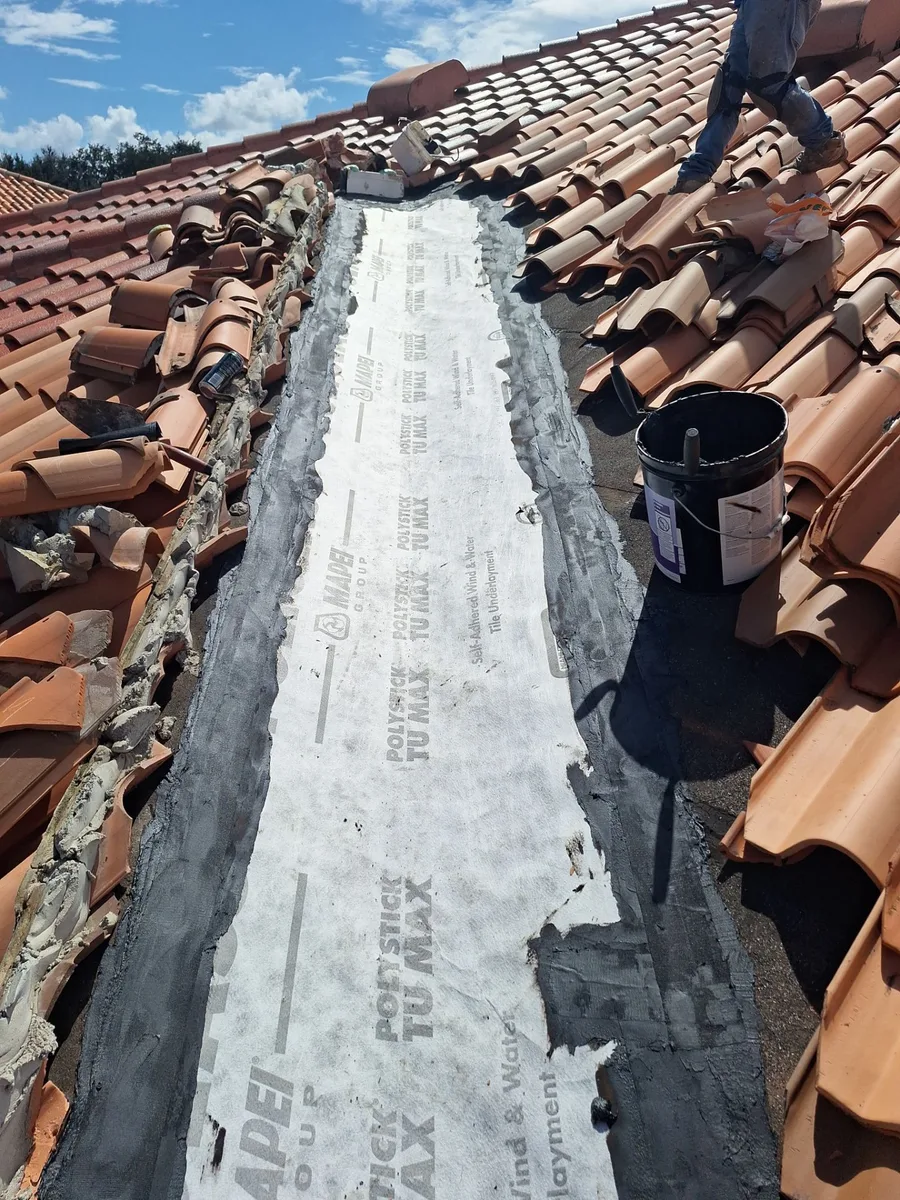
The rebuilt valley mid-install: Polyglass Polystick TU Max self-adhered underlayment bonded down the channel before the tile goes back.
Related
Ready for a Free Roof Assessment?
Call (754) 227-5605 or visit our West Palm Beach roofing hub to schedule a free inspection. Dual-licensed (CCC-1331464 & CGC-1526236), A+ BBB rated, serving Broward & Palm Beach Counties from our Deerfield Beach headquarters.